
Roman Gold Coin Match Game:What is a Roman Gold Coin Match Game and how do you play it?
Q: What is a Roman Gold Coin Match Game and how do you play it?
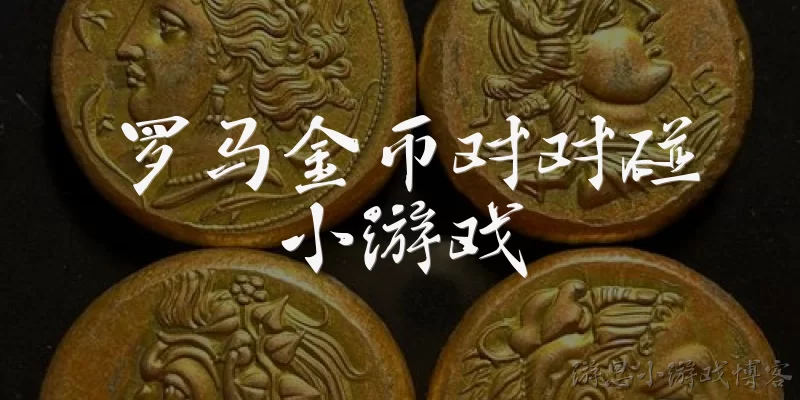
A: A Roman Gold Coin Match Game is a memory-style puzzle where players flip cards to find matching pairs of ancient Roman gold coins, such as the aureus or solidus. The game typically features a grid of face-down cards, each displaying a different coin image. On each turn, you flip two cards. If the coins match, they stay face-up and you earn points; if not, they flip back over and the next player takes a turn. The goal is to remember the positions of the coins and collect the most pairs. Many digital versions include historical facts about each coin, so while you play, you also learn about emperors, deities, and symbols stamped on Roman currency. The game is suitable for all ages, helping improve concentration and short-term memory. You can play solo against the clock or with friends in a competitive mode. Some versions add a timer or limited moves to increase the challenge. Overall, it is an entertaining way to combine fun with a touch of ancient history.
Q: Where can I find a free Roman Gold Coin Match Game to play online?
A: You can find free Roman Gold Coin Match Games on several educational and gaming websites. Start with history-focused platforms like BBC History or Ancient Origins, which sometimes offer interactive memory games. General gaming sites such as Poki, CrazyGames, or Silvergames have memory match categories where you can search for 'Roman coin' or 'gold coin match.' Mobile app stores also have free options: search for 'Roman coin memory game' on Google Play or the App Store. Many of these games are ad-supported but completely free to play. For a more authentic experience, check museum websites like the British Museum or the Metropolitan Museum of Art; they occasionally host online games featuring their coin collections. If you prefer printable versions, teaching resource sites like Teachers Pay Teachers offer free downloadable Roman coin matching cards. Always ensure the site is reputable and safe before playing. With a quick search, you will find plenty of free options to enjoy this historical twist on a classic memory game.
Q: What are the educational benefits of playing a Roman Gold Coin Match Game?
A: Playing a Roman Gold Coin Match Game offers multiple educational benefits. First, it improves memory and concentration as players must recall the location of specific coins. Second, it teaches history: each coin represents a different Roman emperor, deity, or symbol, and matching them helps players associate names with images. For example, a coin featuring Emperor Nero or the goddess Roma becomes a memorable visual anchor. Third, the game enhances attention to detail, since Roman coins often have subtle differences in inscriptions, portraits, and mint marks. Players learn to distinguish between an aureus and a solidus, or between coins from different eras. Fourth, it builds vocabulary related to numismatics and ancient Rome, such as 'denarius,' 'obverse,' and 'reverse.' Finally, the game can spark further interest in Roman culture, economics, and archaeology. Teachers often use such games as a fun supplement to history lessons, making abstract concepts more concrete. Whether played in a classroom or at home, it turns passive learning into an active, engaging experience that sticks with players long after the game ends.
Words of experience
Common scenarios of "Roman Gold Coin Match Game"
【Host】 Welcome to the Roman Gold Coin Match Game! I'm your host, Marcus. Today we have two contestants: Julia, a history teacher, and Alex, a coin collector. Let's see who can match the most Roman gold coins to their correct emperors!
【Julia】 I'm excited! I've studied Roman history, so I hope that gives me an edge.
【Alex】 I've been collecting coins for years, so I know my aureus from my solidus. Let's do this!
【Host】 Great! First round: I'll show a coin. It has a portrait of a man with a laurel wreath, and the inscription reads 'NERO CAESAR'. Which emperor is this?
【Julia】 That's Emperor Nero, of course. He ruled from 54 to 68 AD.
【Alex】 I agree, definitely Nero. The coin is a gold aureus, minted around 60 AD.
【Host】 Correct! Both of you get a point. Next coin: It shows a profile of a man with a short beard, and the text says 'VESPASIANUS'. Who is it?
【Alex】 That's Vespasian, the founder of the Flavian dynasty. He ruled from 69 to 79 AD.
【Julia】 Yes, Vespasian. I recognize the coin type; it's a aureus with Pax on the reverse.
【Host】 Correct again! Now, this coin is a bit trickier: It has a radiate crown, and the legend reads 'TRAIANUS'. Who is this emperor?
【Julia】 That's Trajan. He was emperor from 98 to 117 AD, and the radiate crown often appears on his coins.
【Alex】 I concur. Trajan's gold coins are quite common, but this one looks like a aureus with a reverse of Dacia capta.
【Host】 Excellent! Both correct. Now, for a bonus point: This coin features a facing portrait of a man with a long beard, and the inscription is 'PHILIPPUS I'. Can you identify him?
【Alex】 That's Philip the Arab, who ruled from 244 to 249 AD. He's known for celebrating the millennium of Rome.
【Julia】 I agree, Philip I. The facing portrait is distinctive. This is a rare aureus.
【Host】 Correct! You both are tied. Final round: This coin is a solidus of a later emperor, with the legend 'CONSTANTINUS'. But which Constantine? There are several.
【Julia】 The first thing to check is the style. If it's a solidus with a diademed portrait, it could be Constantine the Great, but the legend 'CONSTANTINUS' without 'MAX' might indicate Constantine II or Constantius II.
【Alex】 I see a mint mark of Antioch and a reverse of Victory with a cross. That suggests Constantine the Great, as he introduced the solidus in 312 AD.
【Host】 The correct answer is Constantine the Great! Alex gets the bonus point for mentioning the solidus introduction. So Alex wins by one point!
【Julia】 Congratulations, Alex! That was a tough one. I'll have to brush up on my later Roman coins.
【Alex】 Thanks, Julia! You were a great competitor. This was fun. Maybe next time we can do a Greek coin match!